
I’ll never forget a 9-year-old chocolate Lab named Toby. His family brought him to a behavior class because he’d become “grumpy.” He stopped greeting them at the door and had recently growled at their 6-year-old son. They were worried he was just “getting old” and aggressive.
But Toby wasn’t aggressive. He was in agony.
A quick, gentle exam showed Toby had severe arthritis in his hips. That “growl” wasn’t malice—it was the only way he could say, “Please don’t touch me, it hurts.”
When we see these changes, our first thought is often guilt. “How did I miss this?”
So, let’s get one thing out of the way: It is not your fault. You are not a bad owner. Your dog is simply a very, very good actor.
Your Dog’s Oldest Secret: Why They Hide Their Hurt
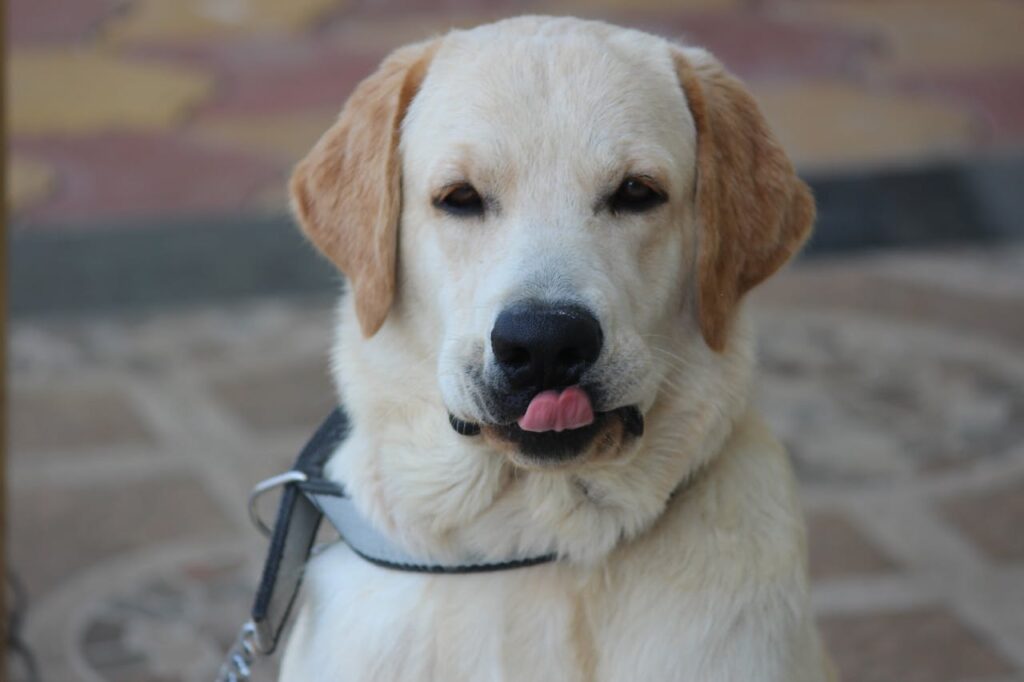
This instinct to hide pain is one of the oldest, deepest secrets your dog carries in their DNA. For their wolf ancestors, showing weakness was a death sentence. A limp or a yelp in the wild was like putting up a big, flashing sign for predators that said, “I’m an easy meal.” Showing pain could also mean losing your spot in the pack.
Here’s the part that breaks my heart: Your dog loves you so much, they will actively hide their pain from you.
That evolutionary instinct to “act fine” is still there. But now, it’s combined with a deep desire to please you, their new “pack leader”. A dog with a serious injury has been known to still try and wag their tail and greet their owner at the door, because their love for you is literally overpowering their ability to show you where it hurts.
They aren’t being “stoic.” They are silently begging you to become a detective. Here are the 10 “silent” signs to look for.
1. The “Grumpy Dog” Myth (A Sudden Change in Personality)
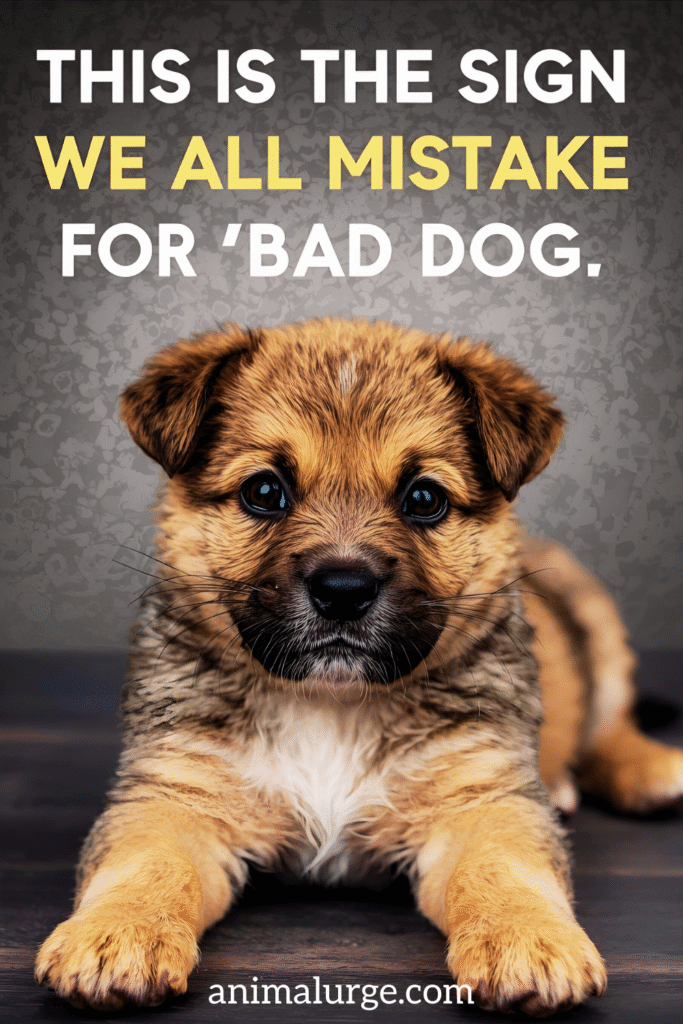
This is the sign we all mistake for a “bad dog.”
- What You See: Your once-sweet, social dog now hides when guests come over, or seems withdrawn and quiet. Or, your gentle dog suddenly growls, snaps, or flinches when you try to pet them, especially on a certain spot.
- What It Might Mean: This is the #1 most-missed sign of pain. In studies of dogs referred for behavior problems, a huge number—sometimes as high as 80%—are suffering from an undiagnosed painful condition. That “aggression” is a defensive, panicked reaction. They aren’t trying to hurt you; they’re trying to protect themselves from being hurt. Common culprits are arthritis, dental disease, or a painful ear infection.
- Your Kind & Practical Action:
- Do NOT Punish the Growl: A growl is not aggression; it is communication. It’s a warning: “I’m scared you’re going to hurt me.” Punishing the growl is like taking the batteries out of a smoke detector. You haven’t stopped the fire; you’ve just removed the warning.
- Become a Detective: When does it happen? When you touch their hips? Their ears? Write it down for your vet.
- Create a “Safe Zone”: Move their bed to a quiet, low-traffic corner where they can rest without being bumped by kids or guests. This gives them immediate peace of mind.
2. Pacing, Pacing, Pacing (New Restlessness or Sleep Habits)
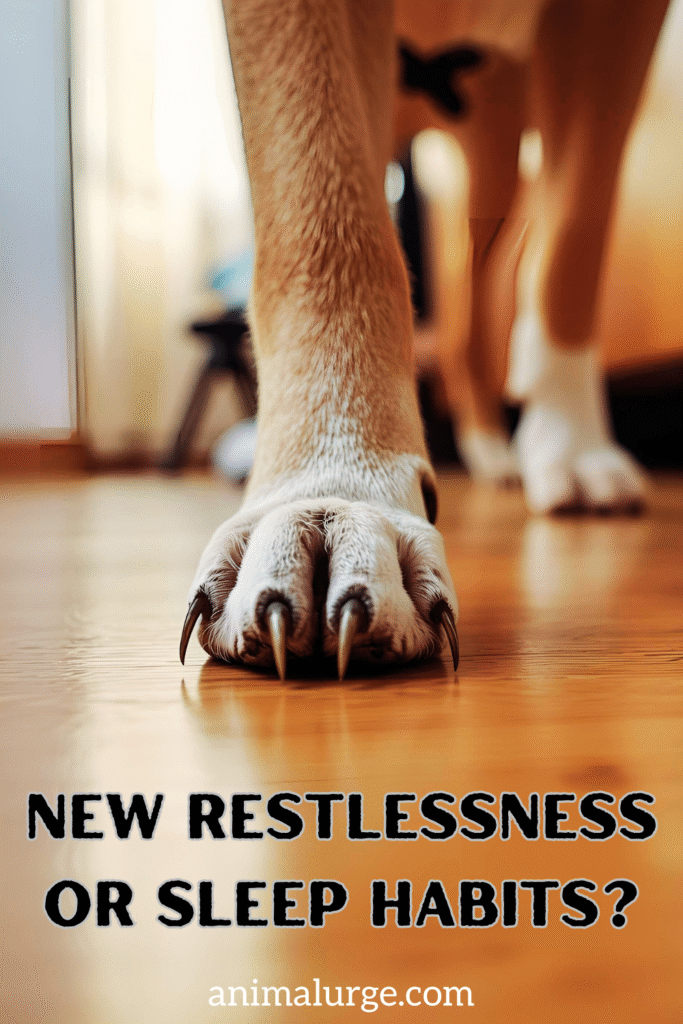
- What You See: It’s 2 AM, and you hear the click-click-click of your dog’s nails on the floor. They get up, circle, lie down, then get up again, just can’t seem to get comfortable. Or, you notice the opposite: your active dog is suddenly sleeping all the time, way more than usual.
- What It Might Mean: Pain ruins sleep. These two opposite signs can point to different kinds of pain.
- Pacing & Restlessness often means a sharp, acute pain. They simply can’t find a position that doesn’t hurt.
- Sleeping More is often a sign of dull, chronic pain (like arthritis). It’s exhausting to be in discomfort all day, and they sleep more as a coping mechanism to escape it.
- Your Kind & Practical Action:
- Upgrade Their Bed: This is the best, easiest first step. A cheap, old, or soft bed offers no support and creates painful “pressure points” on their hips and shoulders. A firm, high-quality orthopedic foam bed distributes their weight evenly and supports their joints, giving them immediate relief.
3. “No, Thanks” to Stairs and Sofas

- What You See: Your dog used to leap onto the couch or into the car. Now, they hesitate, whine, or put their paws up and “ask” you to lift them. They dread the stairs or are “slowing down” on walks. You also notice they are very slow to get up from lying down.
- What It Might Mean: This is the classic sign of joint pain, usually from osteoarthritis (OA). We often dismiss this by saying, “Oh, he’s just getting old.”A Crucial Takeaway: ‘Old Age Is Not a Disease’ Please, if you remember one thing, let it be this. Vets say it all the time: “Old age is not a disease”. “Slowing down” is a behavior, and the cause of that behavior is almost always chronic, treatable pain. Arthritis affects up to 40% of all dogs. By blaming “old age,” we stop looking for solutions.
- Your Kind & Practical Action (The 10-Minute Home Makeover):
- Add Traction: Put down cheap, rubber-backed runners, yoga mats, or carpet tiles on all slippery floors (wood, tile, laminate). A dog with sore, unstable joints is terrified of slipping. Traction gives them confidence.
- Use Ramps: Jumping puts a massive, painful impact on their joints. Get (or build) a simple ramp for the car and the couch. This lets them stay part of the family without the pain.
4. A Hunched Back or “Tucked” Tummy
- What You See: Your dog is standing with their back arched up like a cat (called kyphosis). Their belly seems “tucked up” tight. This is not a relaxed stretch; it’s a stiff, pained posture.
- What It Might Mean:THIS IS AN EMERGENCY. This posture is called “splinting”. Your dog is desperately tensing their muscles to stop intense pain in one of two places:
- Their Spine: This is a “telltale sign” of a slipped disc (IVDD), especially in long-backed dogs like Dachshunds. They are arching to take pressure off their spinal cord.
- Their Abdomen: This is also a classic sign of severe belly pain. This could be life-threatening bloat (GDV), pancreatitis, or a blockage.
- Your Kind & Practical Action:
- Call your vet or an emergency vet immediately. Do not “wait and see.”
- Crate Rest: While you are calling the vet, immediately confine your dog to a small crate or area where they cannot move or jump. If it is a spinal injury, one wrong move could cause permanent paralysis.
5. Panting in a Cool Room
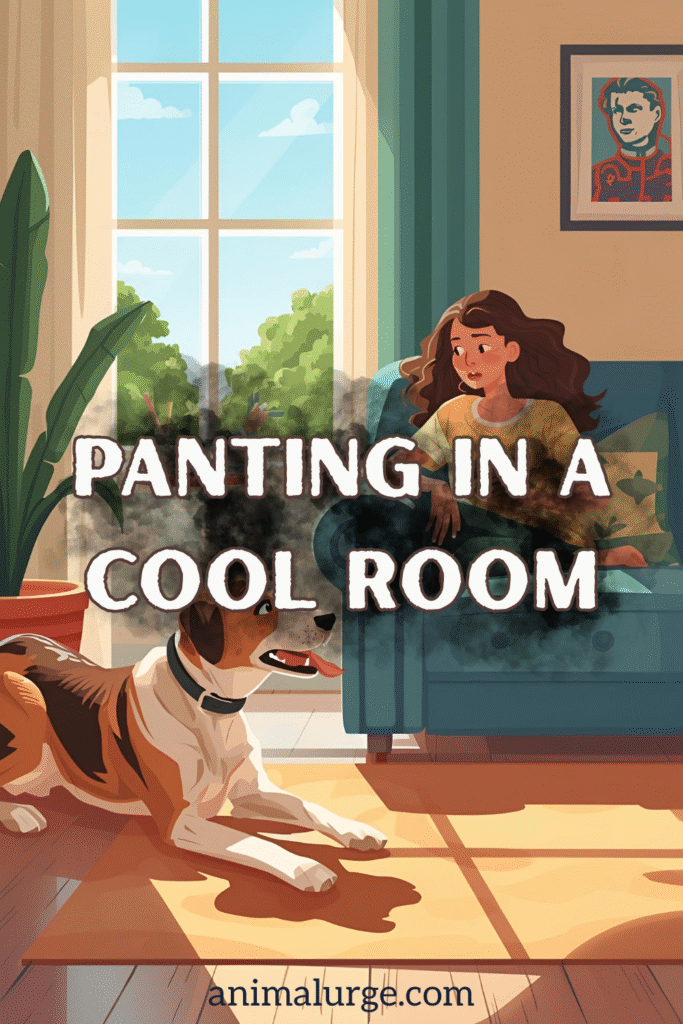
- What You See: You’re relaxing in your cool living room, but your dog, who hasn’t been exercising, is panting heavily, quickly, or shallowly.
- What It Might Mean: This isn’t about being hot; it’s a physical stress response. Both pain and anxiety flood the dog’s body with the stress hormone cortisol. Cortisol acts like an internal furnace, raising their metabolism and body temperature. Your dog must pant to cool down their “internal furnace,” even if the room is cold. This is a major red flag for pain or other serious issues like heart or lung problems.
- Your Kind & Practical Action:
- Check Their Gums: Gently lift their lip. Gums should be pink. If they are pale, white, or blue-ish, this is a severe emergency.
- Cool & Calm: Move them to a quiet, dark room. If the panting stops, it may have been anxiety. If it continues, it’s a medical problem.
- Call the Vet: If it doesn’t stop in a few minutes, call your vet.
6. The Non-Stop Licking Spot
- What You See: Your dog is obsessively licking or chewing one spot, usually on their lower leg or wrist. The fur is gone, and the skin is raw, red, and raised. This is often called a “Lick Granuloma”.
- What It Might Mean: This is one of the most fascinating “silent” signs. Most people (and many old articles) blame this on “boredom,” “anxiety,” or “allergies”. While those can be factors, modern research shows a very strong link to underlying physical pain. The dog is often licking the skin right over a painful, arthritic joint. The licking is a self-soothing behavior, like you rubbing a sore knee. This creates a vicious cycle: Pain -> Licking -> Skin gets raw -> Skin gets infected -> Skin hurts/itches -> More Licking.
- Your Kind & Practical Action (The 2-Pronged Attack):
- Stop the Self-Harm: You must break the cycle. Use an e-collar (the “cone”) or a soft inflatable collar. This is not cruel; it’s the only way to let the skin heal.
- Fix the Real Problem: At the vet, don’t just ask for a skin cream. Say, “He has a lick granuloma on his wrist. I’ve read this can be caused by underlying joint pain. Can we please take an X-ray of that joint to check for arthritis?”.
7. Their Face Just Looks… “Worried”
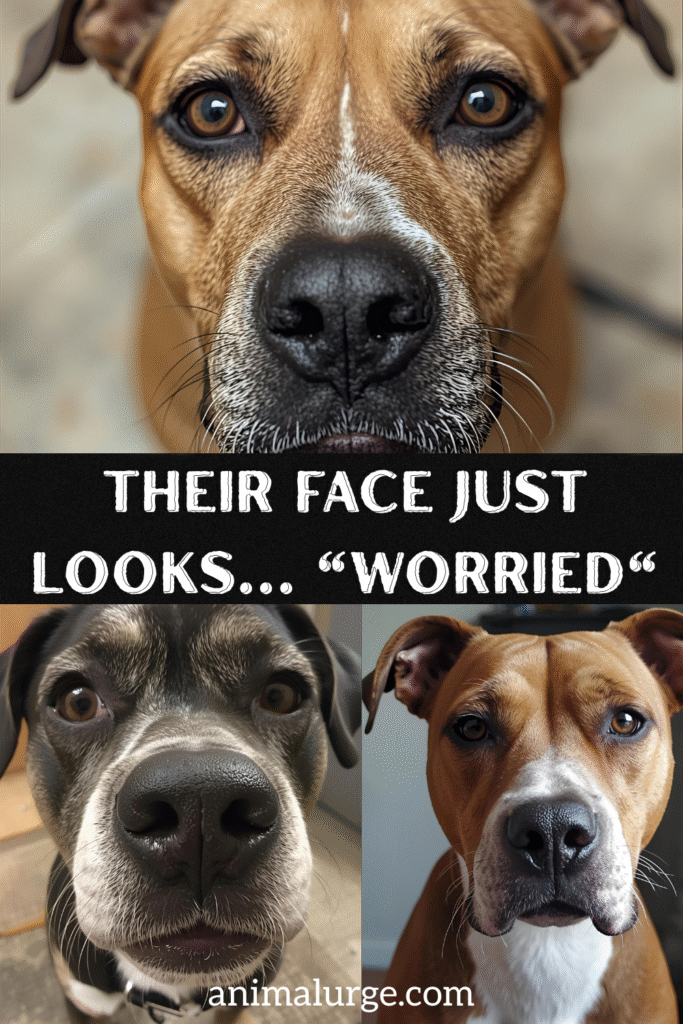
- What You See: This one is subtle. Your dog’s face just looks… different. Their eyes might be squinty, half-closed, or have a “worried” look. Their expression seems “blank” or “glazed over”. You may see new tension around their mouth (a “grimace”) or their ears held flat.
- What It Might Mean: You are not imagining it. You’re reading their “pain face.” Scientists have developed formal “Grimace Scales” for animals to assess pain based only on facial expressions. You, as their owner, are an expert in their normal face. If you sense they look tense or worried, you are picking up on real data.
- Your Kind & Practical Action:
- The Photo Test: Find a photo of your dog on your phone from a year ago, happy and relaxed. Now look at them. Does their face look less relaxed? Are their eyes squinted? Trust your gut.
8. Changes at the Food Bowl
- What You See: Your “food hound” is suddenly leaving food in the bowl, or acts hungry but then backs away.
- What It Might Mean:How they refuse food is the real clue.
- Clue 1: If they drop food, chew only on one side, or suddenly refuse hard kibble (but eat soft food), it’s almost certainly dental pain (a broken tooth, abscess, or gum disease).
- Clue 2: If they hesitate to lower their head to the bowl, or even lie down to eat, it’s a massive sign of neck or back pain. It simply hurts to bend over.
- Your Kind & Practical Action:
- The Soft Food Test: Mix warm water into their kibble to soften it. If they eat it eagerly, you’ve likely found a dental problem.
- Raise Their Bowls: This is an easy, instant fix for neck pain. You don’t need a fancy feeder; just place their bowls on a sturdy box or step stool. This brings the food to them.
9. Shaking or Trembling (When It’s Not Cold)
- What You See: Your dog is shivering, but the house is warm. You might notice just their back legs trembling while they stand still.
- What It Might Mean: This is often mistaken for fear or just “being a small dog.” But it’s frequently a sign of pain, especially spinal pain. When a dog is in pain, they hold their body in a stiff, unnatural way to “guard” the sore area. This is exhausting. Their muscles fatigue and begin to shake. It can also be a direct sign of a neurological issue.
- Your Kind & Practical Action:
- Gently wrap your dog in a warm blanket.
- Take a video. This is a symptom that is very helpful for a vet to see.
- Call your vet. Shaking combined with a hunched back is an urgent visit.
10. The “Scuffing” Sound
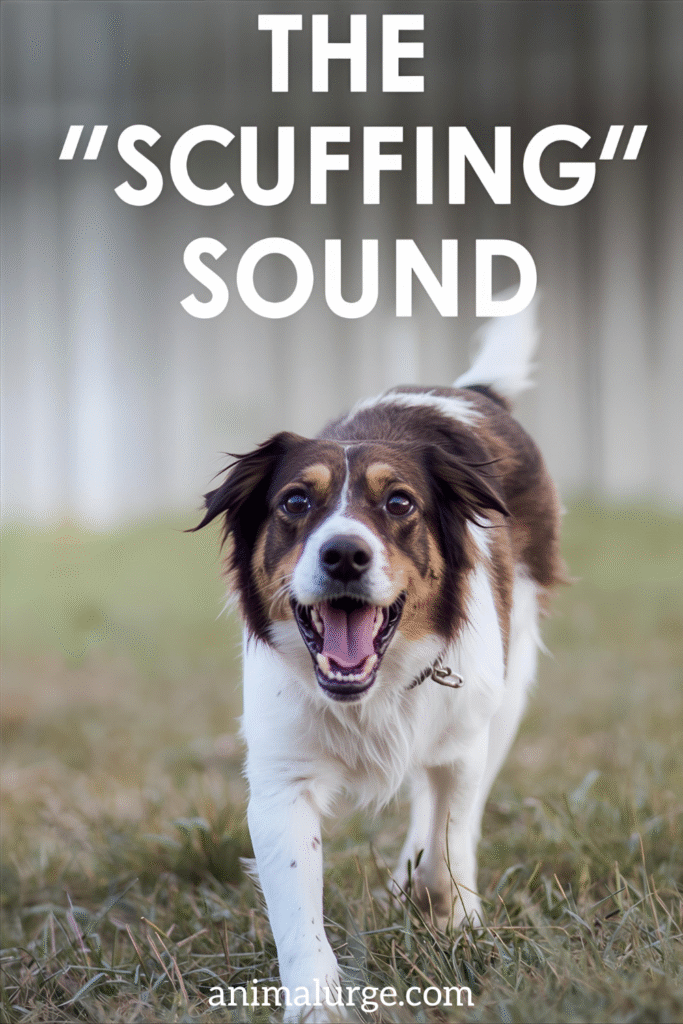
- What You See (or Hear): This is my favorite “silent” clue. You don’t see this one—you hear it. On a walk on pavement, you hear a “scuff… scuff… scuff” sound. When you look at their nails, the middle two on one paw are short, flat, or worn down compared to the others.
- What It Might Mean: A healthy dog lifts its paws cleanly. A dog with a painful limb (like from hip or knee arthritis) gets “lazy” with that leg. It hurts to make the full motion of lifting it, so they drag it just slightly. This scuffing wears down the nails. It can also be a sign that the nerves aren’t working right (a neurological issue). This is a “smoking gun” for a chronic problem.
- Your Kind & Practical Action:
- Listen: On your next walk, just listen.
- Check: Compare the nails on all four paws. Is there a difference?
- Tell Your Vet: This is a specific, objective clue. Say, “I’ve noticed he’s scuffing the nails on his back-left paw.”
A Quick Report: The Hidden Trap We Set for Our “Tough” Dogs
I want to share one last, important discovery. Research shows that we humans—all of us, even vets—are biased about pain. We tend to believe that “tough” breeds (like Pitbulls, Labs, or Rottweilers) feel less pain, and that small breeds are “dramatic”.
There is no known scientific basis for this belief.
But this stereotype is dangerous. It means we might see a Pitbull limping and think, “Oh, he’s a tough boy, he’ll shake it off.” We delay their care because we’ve stereotyped them. Your dog’s stoicism doesn’t mean they aren’t in pain; it means they are especially good at hiding it and need you to be an even better detective.
Trust the signs, not the stereotype.
Your Most Important Job: How to Be Your Dog’s Pain Detective
You are the person who sees your dog every day. You are their most important advocate. Here is how to give your vet the best clues.
The “Adrenaline Mask”: Why Your Dog Looks “Fine” at the Vet
Have you ever had this happen? Your dog is limping all morning, but as soon as you get to the vet clinic, the limp vanishes. It’s not a trick! The vet clinic is a new, stressful place. Your dog’s body floods with adrenaline, which is a powerful, natural pain-masker. Your vet can’t treat what they can’t see.
Your Phone is Your Most Powerful Tool
This is your #1 solution. A video taken at home, showing the symptom as it’s happening, is objective proof. It cuts right through the “adrenaline mask”.
Here is exactly what to film to help your vet get the best diagnosis:
| Symptom You See | What to Film | Camera Angle |
| Limping / Stiffness | Your dog walking away from you, and toward you. | Stable, low to the ground. |
| Trouble Getting Up | Your dog getting up from a lying position. | From the side. |
| Stair Issues | Your dog going up the stairs, and down the stairs. | From the side and from behind. |
| “Scuffing” / Wobbling | Your dog walking in slow circles (both ways). | From above or the side. |
| Panting / Shaking | A 30-second clip of them at rest. | Close enough to see their chest/face. |
A simple Pain Journal also helps. On a notepad, just write:
- What sign did you see? (e.g., “limping on front right leg”)
- What time of day? (e.g., “in the morning,” which often means arthritis)
- What happened right before? (e.g., “after our long walk” or “when I touched his back”)
A Critical Warning: NEVER Give Human Pain Medication Please, never give your dog human pain medicine (like Advil/Ibuprofen or Tylenol) unless your vet tells you to. These can be toxic, cause severe stomach bleeding, and be deadly to dogs.
You are your dog’s guardian. You know them better than anyone. Your observation, your intuition, and that little video on your phone are the most powerful tools you have.
The more you learn to listen, the more your dog will trust you—and that’s where healing begins.


[…] Also Read: 10 ‘Silent’ Signs Your Dog Is in Pain (But Is Trying to Hide It From You) […]
WLCzOQpMkKXWtyJAh