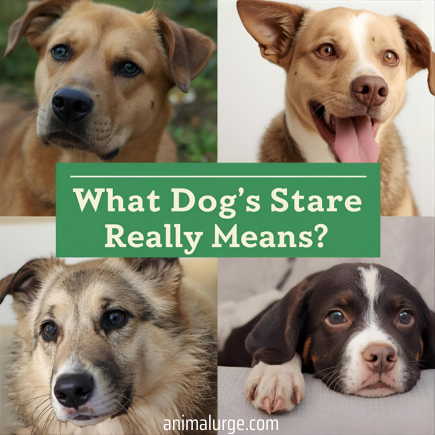
If you have a dog, you know the feeling.
You’re sitting on the couch, reading a book, or just making coffee, and you feel it. A pair of eyes, locked on you. You look down, and there they are, staring at you with an intensity that can feel… well, a little confusing.
Are they loving you? Judging your choice of snack? Planning to steal your seat?
You’re not alone in wondering. A dog’s stare is one of the most powerful and complex ways they “talk” to us. It’s a language they developed just for us.
In the wild animal world, a long, direct stare is almost always a threat. But over thousands of years living with us, dogs have turned this threat signal into a powerful tool for bonding.
The problem is, they use it for everything. And what your dog’s stare really means depends on their whole body, the situation, and your relationship.
Let’s decode that look, together.
The “Love Stare”: The Best Feeling in the World
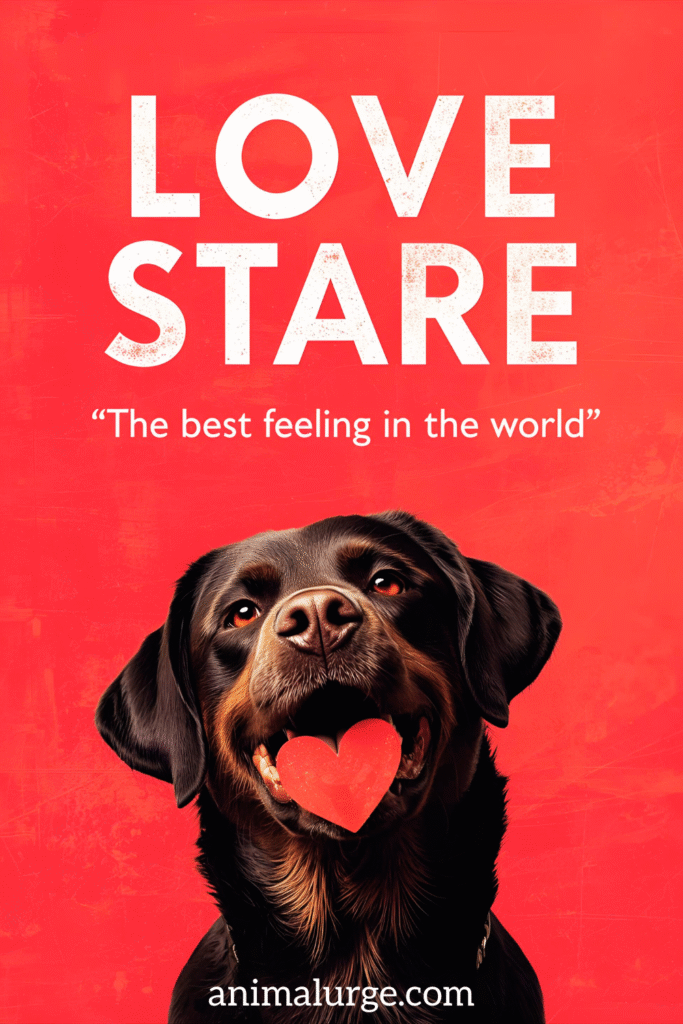
Let’s start with the best one. You know this look. Your dog’s eyes are soft, relaxed, and maybe even a little squinty. Their body is loose and wiggly, their tail might be giving a slow, sweeping wag, and they might lean into you.
What it means: This is pure, unfiltered affection. Your dog is telling you, “I love you. I trust you. I feel completely safe.”
The Science (Here’s the amazing part): When your dog stares at you like this, your brain releases a chemical called oxytocin. It’s known as the “love hormone” or “bonding chemical,” and it’s the same hormone that helps a new parent bond with their baby.
And it gets better. Research shows that when you gaze back with love, your dog’s brain releases oxytocin, too.
Scientists call this the “oxytocin-mediated positive loop”. We call it the “Love Loop.” Your dog literally evolved to “hijack” a human bonding pathway, wiring themselves into our families on a deep, chemical level. They aren’t just like family; your body’s own chemistry thinks they are.
What to do: Enjoy it! Don’t look away just because it feels intense.
- Return the gaze with your own soft, relaxed eyes (not a hard, unblinking stare, which can be scary).
- Talk softly to them.
- Offer a gentle pet or a slow scratch.
- When you do this, you are actively strengthening your bond. You are completing the loop.
The “I Need Something” Stare: The Great Communicator
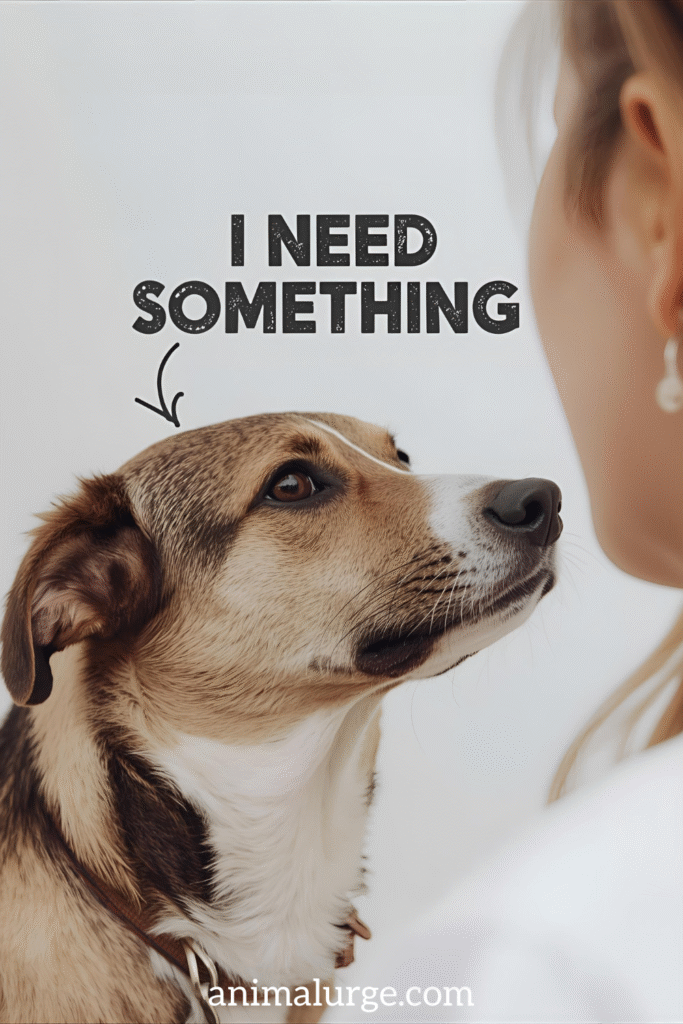
Sometimes, a stare isn’t about emotion—it’s about information. Your dog is smart. They have learned that staring at you is the fastest way to get a result.
The “I Want That” Stare (The Beggar)
This is the intense, unblinking, laser-focused stare you get when you’re holding a sandwich. It might be paired with “puppy eyes” or a little drool.
What it means: “I see you have food. I would also like to have food. I will stare until you understand this.”
This is part-instinct and part-learned behavior. In a pack, other dogs might watch the leader eat, waiting for scraps. But mostly, they do it because it works. Even if you only gave in one time, six months ago, you taught them that “Staring = Food”.
What to do:
- Don’t reward the stare. Giving them food from your plate is the number one reason this behavior continues.
- Give them a better job. Instead of scolding them, redirect them. Teach them a “Go to Your Mat” or “Go to Your Bed” cue.
- Make their spot rewarding. Before you sit down to eat, ask your dog to go to their mat. Give them a special, high-value chew (like a puzzle toy with some peanut butter) that they only get when they are on their mat during your dinner. This way, they learn that staying on their mat is way better than staring at you.
The “I’m Confused” Stare (The Head Tilt)
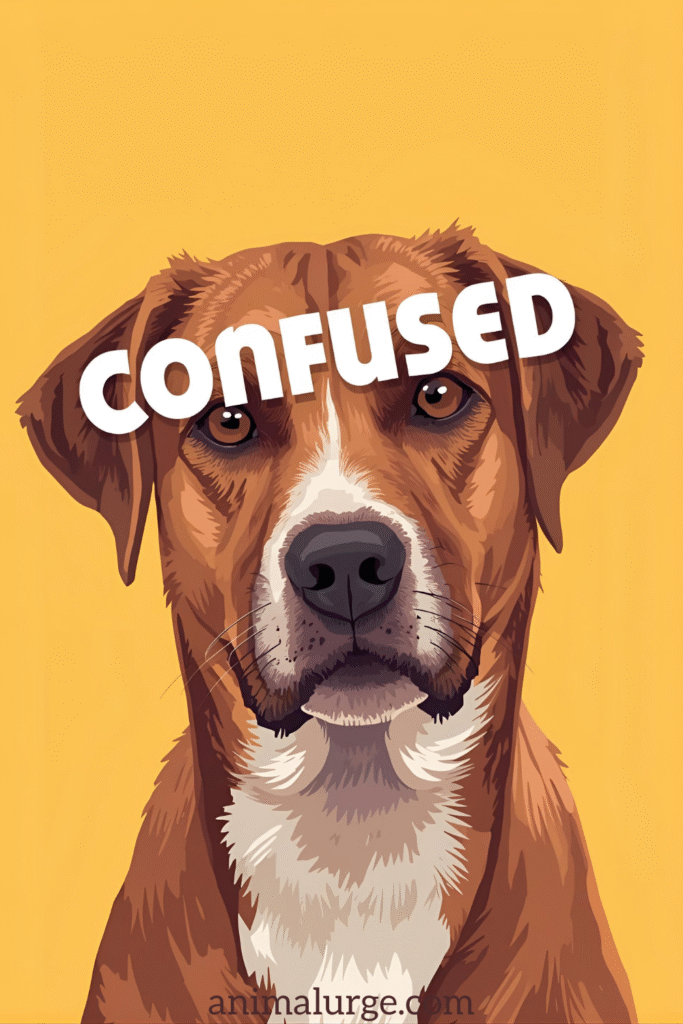
You say a word they know, like “walk?” or “treat?” and they lock eyes with you and tilt their head.
What it means: This isn’t just confusion; it’s concentration. This is a lesser-known insight that’s so wonderful: they are actively trying to understand you.
Dogs are brilliant at reading us. They may tilt their heads to:
- Hear better: Their ear flaps can block sound, so a tilt helps them pinpoint exactly where your voice is coming from.
- Process your words: Studies show that dogs who know more words (like “Gifted Word Learners”) tilt their heads more often. They may be trying to match the sound you made to a memory, like a little mental dictionary.
What to do: Be proud! This is a sign of a highly engaged and intelligent dog. Speak clearly, use a happy tone, and know that you are watching your dog think.
“Red Flag” Stares: When to Pay Close Attention
This is the most important part of understanding your dog’s stare. Sometimes, it’s not affection, and it’s not a question. It’s a warning or a sign of trouble.
Learning to see these “red flag” stares is the kindest thing you can do. It’s how you protect your dog and everyone around them.
The “Hard Stare” (The Warning: “Please Back Off”)
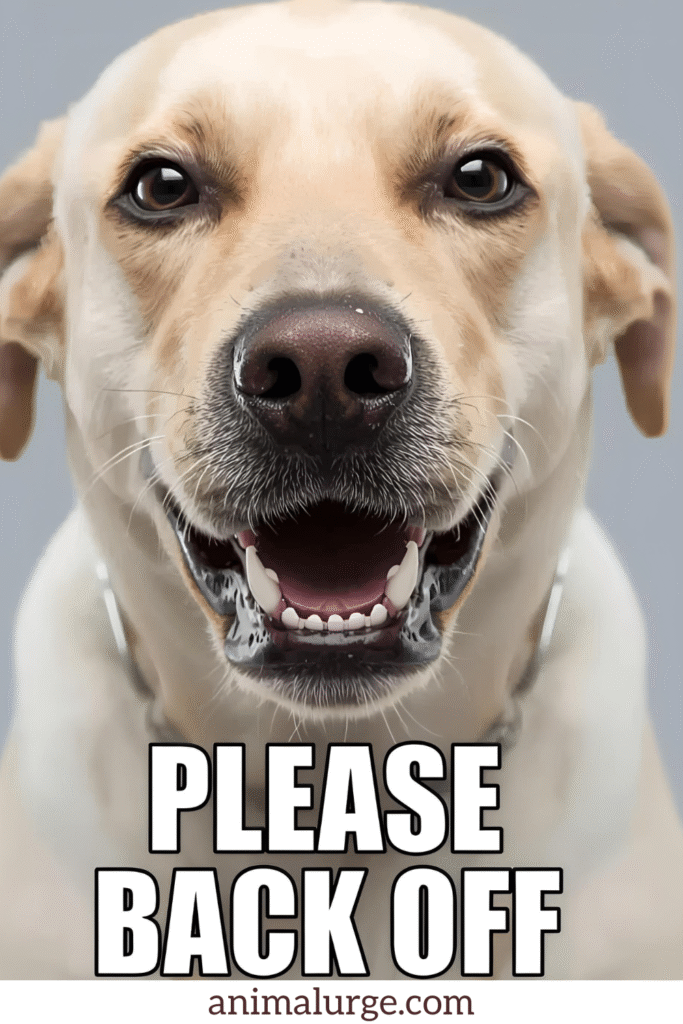
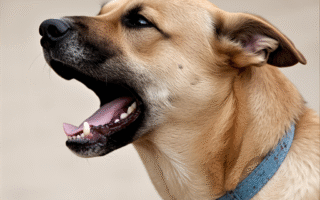
This is the opposite of the Love Stare. The dog’s body will go completely stiff and frozen. Their stare is direct, hard, unblinking, and “cold”. They may close their mouth, bare their teeth, or give a low, rumbling growl.
What it means: “I am deeply uncomfortable. I am warning you to stop what you are doing and move away.”
You will often see this during “resource guarding,” when the dog has a high-value item like a bone, a toy, or their food bowl.
What to do (This is critical):
- IN THE MOMENT:
- DO NOT stare back, yell, or move toward them. This is a challenge.
- DO NOT punish them for growling. The growl is their warning. If you punish the warning, they learn not to warn… and next time, they may just bite.
- DO remain calm. Slowly turn your body to the side, break eye contact, and calmly walk away. You are showing them you are not a threat.
- LONG-TERM:
- This is not something to fix on your own. Please call a professional. Look for a certified professional dog trainer (CPDT-KA) or a veterinary behaviorist (DACVB) to help you. They can help you and your dog safely.
The “Whale Eye” Stare (The Anxious Plea: “I Feel Trapped”)
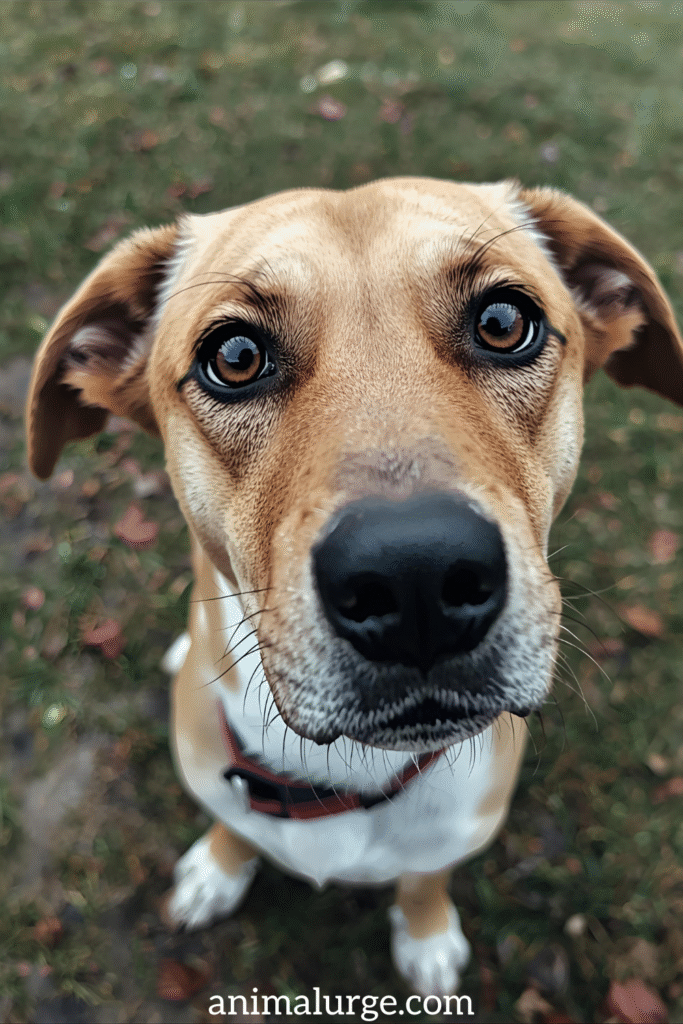
This is a signal that is so often missed. The dog will turn its head slightly away from what’s bothering it (like a child or a stranger), but its eyes stay locked on them. You will see the whites of their eyes (the sclera) in a half-moon shape.
What it means: “I am very scared and stressed. I want to escape, but I can’t, so I’m monitoring the threat.”
This is the look a dog gives when a child is hugging them too tightly, or a stranger is petting them too hard. They may also be yawning, panting, or licking their lips. They are screaming that they are uncomfortable.
What to do: Be your dog’s hero. You are their advocate.
- The moment you see “whale eye,” step in.
- Create space immediately.
- Gently block the person petting them and say, “He needs a little break!”
- Lift the child away and say, “That was a nice hug, now let’s give him some space.”
- By removing the stress, you teach your dog that you listen to them, and their trust in you will grow.
The “Blank Stare” (The Medical Alert: “I Don’t Feel Right”)
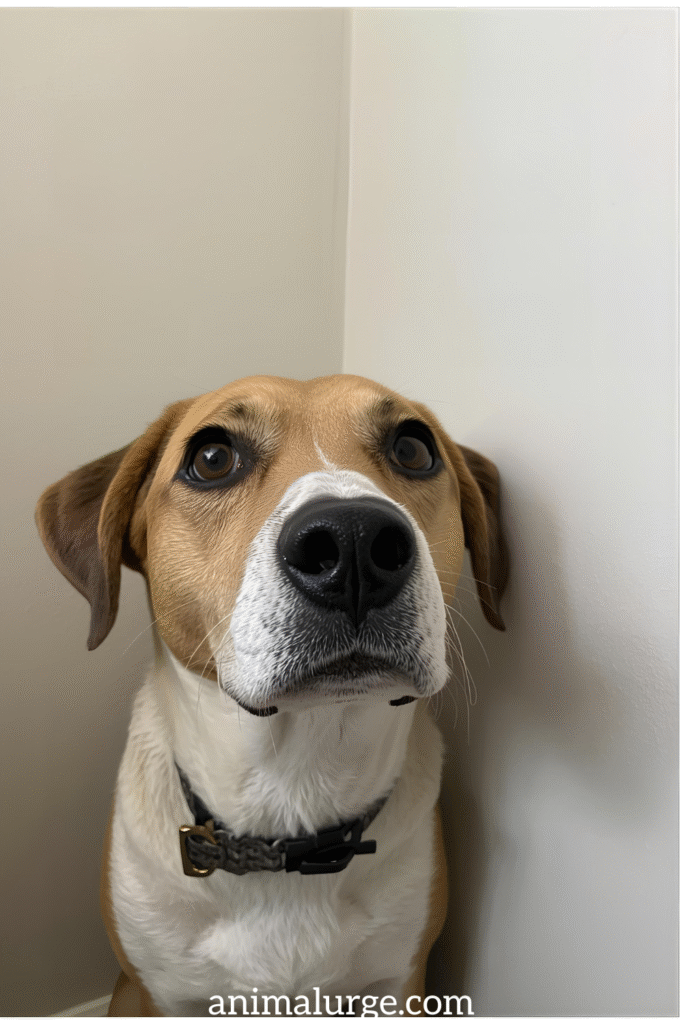
This stare is different. It’s vacant. Your dog may be staring at a wall, into a corner, or just into space. They may seem “spacey,” confused, or hard to get their attention.
What it means: This is not a “behavior.” This is almost always a symptom that needs medical attention. It could be:
- Pain: Dogs hide pain well. A vacant stare, especially with restlessness, can be a sign they are in pain.
- Canine Cognitive Dysfunction (CDS): In senior dogs, this is a classic sign of “doggy dementia.” They may also get “stuck” behind furniture or forget where they are.
- Partial Seizures: A seizure isn’t always a big, dramatic event. A “focal seizure” can look just like a moment of zoning out or staring blankly.
What to do:
- Take a video of the episode on your phone.
- Call your veterinarian and make an appointment. Show them the video. This is not a “wait and see” situation. Getting a fast diagnosis is the best way to help your friend.
Quick Guide: What Your Dog’s Eyes Are Saying
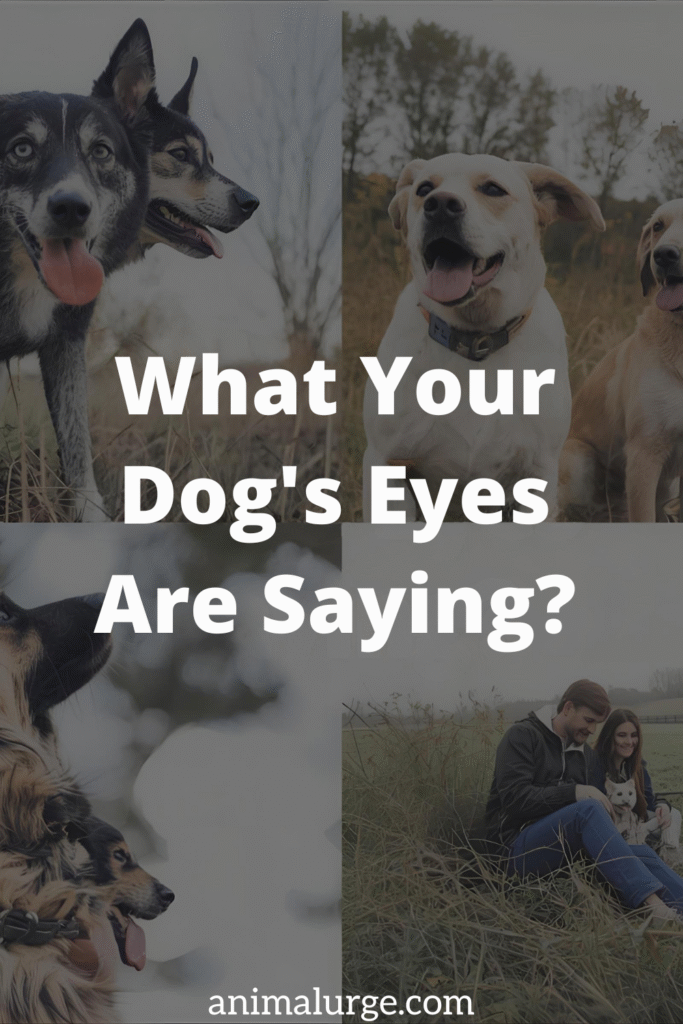
Use this cheat sheet to quickly check in with your dog.
| Stare Type | What It Looks Like (Eyes & Body) | What It Means | Your Kind Action |
| The “Love” Stare | Eyes: Soft, squinty, relaxed. Body: Loose, wiggly, soft tail. | “I love you. I feel safe.” | Return it! Gaze back softly, speak in a gentle voice, and offer a pet. |
| The “I Need” Stare | Eyes: Focused, direct. Body: Alert, may paw or stand by the door/bowl. | “I need to go out!” or “My bowl is empty!” | Respond. Meet their need. If they are begging, redirect them to a mat. |
| The “Hard” Stare | Eyes: Hard, “cold,” unblinking. Body: Frozen, stiff, tense. May be guarding a toy or food. | “BACK OFF. I am serious.” | De-escalate. Calmly look away, turn your body, and give them space. Call a professional. |
| The “Whale Eye” | Eyes: Head turned, whites of eyes show. Body: Tense, may be yawning or licking lips. | “I am very scared. I feel trapped.” | Advocate! Immediately remove the stressor (like a stranger or child). Create space. |
| The “Blank” Stare | Eyes: Vacant, “spacey,” staring at a wall. Body: Confused, may seem “stuck” or lost. | “I don’t feel right. I may be in pain or confused.” | Call your vet. Take a video of the behavior to show your doctor. This is a medical sign. |
Your dog is “talking” to you all the time. You don’t have to be a perfect expert to understand them. You just have to be a good listener.
That stare is a gift. It’s the story of your shared life. The more you learn to listen with your heart to what their eyes are saying, the safer they’ll feel.
And that’s how a good bond becomes a great one.
Also Read: 10 ‘Silent’ Signs Your Dog Is in Pain (But Is Trying to Hide It From You)
[…] Read More: What Your Dog’s Stare Really Means (It’s Not Always Affection) […]