
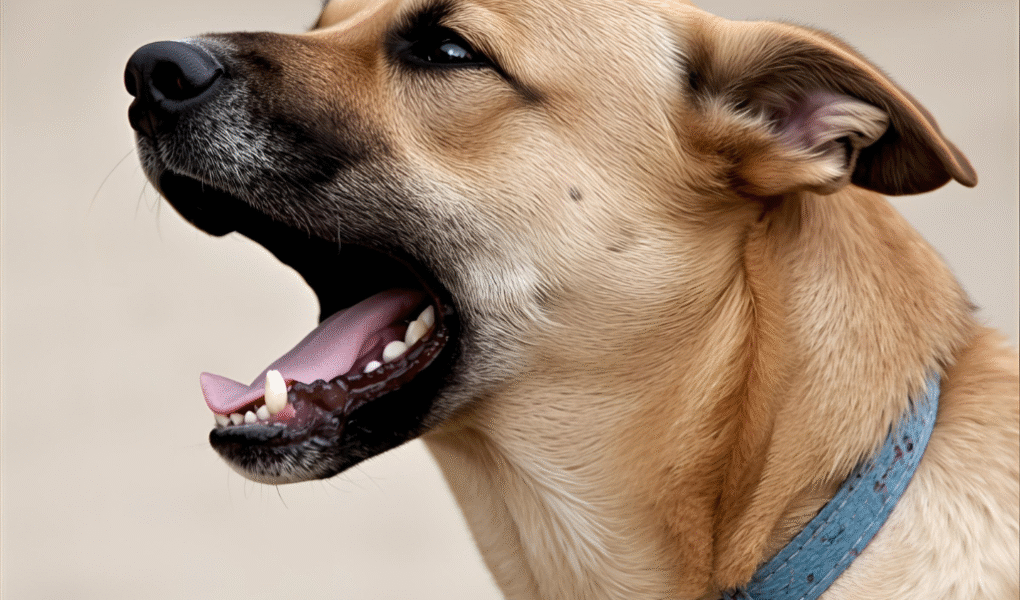
You’re walking down the street when your dog spots someone approaching… and before you can even breathe, the barking starts. Loud. Sharp. Relentless. Your neighbors glance over, the stranger speeds up, and your shoulders tighten.
Or maybe it happens at home — the moment the doorbell rings, your dog explodes into a frenzy of barking as if a threat has arrived.
It’s frustrating, embarrassing, and overwhelming. And it makes you wonder:
Why does my dog do this?
And can it really be fixed?
The good news: yes — absolutely.
But first, you need to understand what your dog is actually communicating.
Why Dogs Bark at Strangers (The Real Reasons Behind the Behavior)

Dogs don’t bark at strangers because they’re “bad” or “disobedient.” Barking is communication. And it usually stems from one of three core reasons.
Reason #1: Territorial Protection and Alertness
Many dogs see strangers near their home, yard, or walking route as potential intruders.
Their natural instinct says:
“This is my space — I need to protect it.”
This isn’t aggression. It’s a built-in warning system. Most dogs are genetically wired to alert their family to unfamiliar people or sounds.
Reason #2: Fear and Lack of Socialization
This is the most common — and most misunderstood — cause.
If a dog wasn’t exposed to a variety of people between 3–14 weeks old, strangers can feel scary or unpredictable. Dogs adopted during the pandemic or rescues with unknown histories often fall into this category.
A fearful dog isn’t “misbehaving.”
They’re overwhelmed. They’re scared. And barking is the only tool they have.
Reason #3: They’ve Learned Barking Works
This happens accidentally:
- A stranger approaches → dog barks → stranger walks away
- Doorbell rings → dog barks → visitor hesitates or backs up
- Dog barks → owner scolds (attention!)
Your dog’s brain forms a simple, powerful link:
“I bark → something happens. Barking works.”
Even if that outcome was a coincidence, your dog still thinks barking caused it.
Step 1: Learn What Your Dog’s Body Language Is Telling You

Before you fix the barking, you must understand whether your dog is barking from fear or confidence. The training approach changes completely depending on the source.
Signs Your Dog Is Barking From Fear
- Ears pinned back
- Tucked or low tail
- Trembling or shaking
- Avoidance (backing away or hiding)
- Dilated pupils
- Tight, closed mouth
This dog is saying:
“I’m scared. Please stay away.”
Signs Your Dog Is Barking From Territorial Instinct
- Tail held high and stiff
- Ears forward
- Body tall and rigid
- Standing between you and the stranger
This dog is saying:
“I’m alerting you. Someone is approaching our territory.”
Why This Matters
A fearful dog needs confidence-building and desensitization.
A territorial dog needs clear structure and calm redirection.
Using the wrong approach can make things worse, so observe carefully.
Step 2: Prevent the Barking From Getting Worse (Smart Management)
Before training can work, you must stop your dog from practicing the behavior.
Every time your dog barks at a stranger, the habit gets stronger.
Create a Safe, Low-Pressure Space
Give your dog a quiet room, corner, or crate where they feel secure when:
- guests visit
- deliveries arrive
- maintenance workers come over
This reduces their feeling of responsibility to “protect.”
Use Simple Management Tools
- Baby gates — prevent lunging toward the door
- Closed doors — reduce visual triggers
- Leash control — keeps your dog from rushing strangers
Management is not punishment.
It’s preventing rehearsal of the unwanted behavior.
Manage the Trigger (Especially the Doorbell)
Doorbell-reactive dogs can be conditioned gently:
- Play the doorbell sound at VERY low volume
- Immediately give high-value treats
- Increase volume slowly over days or weeks
This teaches your dog:
“Doorbell = good things.”
Tell Visitors to Ignore Your Dog
Ask guests:
“Please don’t look at my dog, talk to them, or reach out to pet them.”
To a fearful or reactive dog, interaction is pressure.
To a territorial dog, interaction is reinforcement.
Ignoring removes fuel from both.
Step 3: Change How Your Dog Feels About Strangers (Counterconditioning)
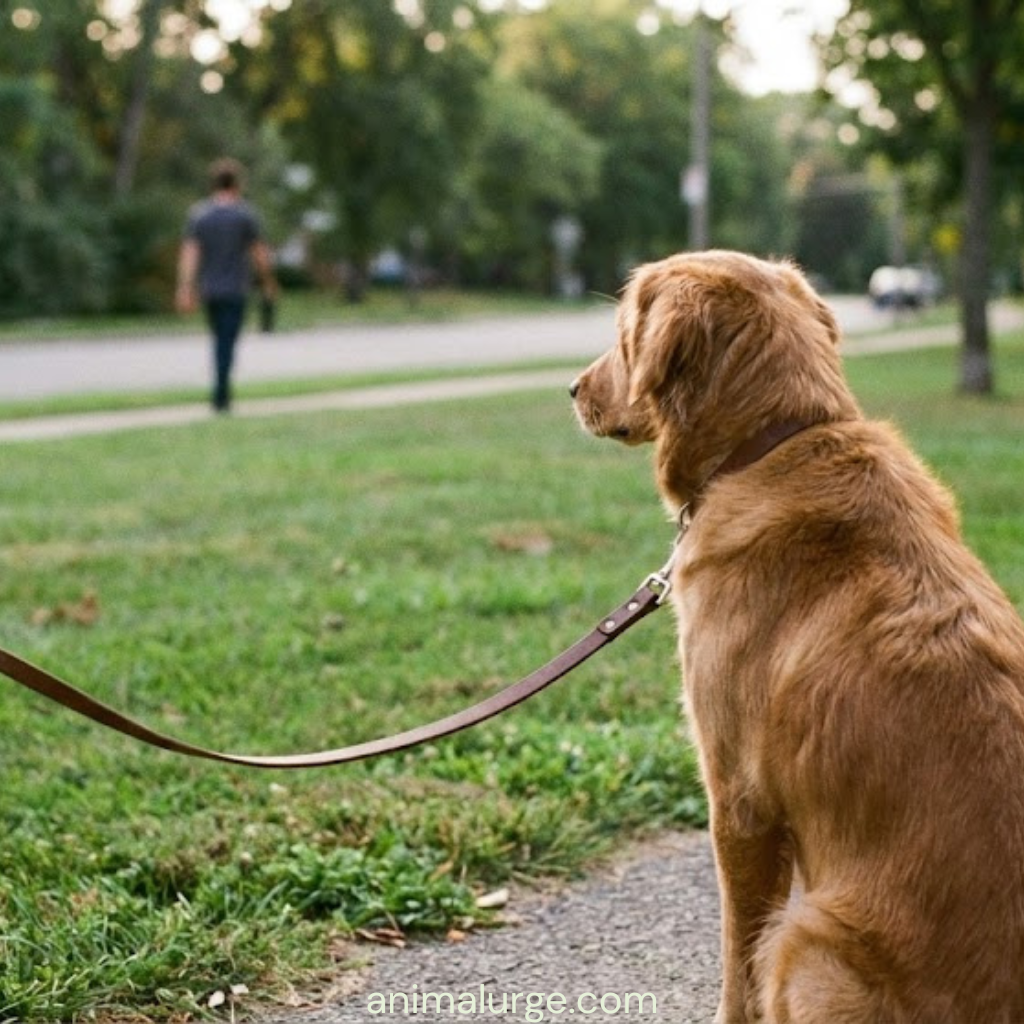
This is where real transformation happens.
You’re teaching your dog a new emotional association:
“Stranger = something good happens to me.”
This science-backed method rewires your dog’s emotional response over time.
Start at a Distance Where Your Dog Stays Calm
This is called below threshold — your dog notices the stranger but isn’t scared or barking.
At that distance:
- Stranger appears → treat appears
- Stranger appears → treat appears
- Stranger appears → treat appears
Repeat over many sessions.
Your dog learns:
“Strangers predict rewards.”
Timing Is Everything
Give the treat:
- immediately
- BEFORE the bark
- right when your dog sees the stranger
This makes the association clear and strong.
Gradually Move Closer
If your dog remains calm, decrease the distance slowly.
If they bark, you moved too fast.
Progress, don’t push.
Step 4: Teach a Calm Behavior That Replaces Barking

Your dog cannot bark and be calmly focused at the same time.
Teach them something incompatible with barking.
Option 1: Teach “Go to Bed” or “Place”
- Train your dog to go to a mat or bed on cue
- Reward heavily for lying down calmly
- Introduce distractions
- Eventually use it when guests arrive or strangers appear
If they’re calmly on their mat,
they cannot be at the door barking.
Option 2: Teach “Sit” or “Watch Me” When Strangers Appear
This redirects their focus back to YOU.
- Stranger appears → dog looks at you → treat
- Repeat until automatic
Over time, strangers become the cue for calm behavior.
Use a Marker Word (“Yes!”) or Clicker
The moment your dog:
- looks at you
- stays calm
- steps toward their mat
…mark it and reward immediately.
This builds a powerful reinforcement loop.
Step 5: Practice With Real, Controlled Visitors
Once your dog is progressing, introduce calm people to help solidify training.
Start With One Quiet, Cooperative Friend
Your helper should:
- ignore your dog completely
- toss treats from a distance
- avoid eye contact
If your dog stays calm, reward generously.
Slowly Decrease the Distance
Over multiple sessions:
- visitor stands closer
- visitor sits down
- visitor moves naturally
Only introduce attention or petting once your dog initiates calm interaction.
Gradually Add More People
Each successful exposure builds confidence.
Your dog learns:
“New people aren’t scary. They’re predictable and safe.”
The Emotional Truth Behind Your Dog’s Barking
Your dog isn’t trying to be difficult.
They’re communicating.
They’re either saying:
- “I’m scared.”
or - “I’m trying to protect us.”
Punishment, yelling, or harsh corrections:
- increase fear
- increase tension
- damage trust
- suppress barking without solving the emotion behind it
Real change happens when you address the emotion, not just the noise.
Quick Timeline: What to Expect
Weeks 1–2:
Less barking due to better management and fewer triggers.
Weeks 3–6:
Your dog’s body language becomes looser and calmer around strangers.
Weeks 6–12:
You see genuine emotional progress: curiosity replaces fear.
3+ Months:
For many dogs, deeper fears take time — but steady improvement continues.
If your dog experiences extreme fear or reactivity, consult a certified positive dog trainer or a veterinary behaviorist. Some dogs benefit from temporary anxiety medication to support the learning process.
A Final Word
Your dog’s barking is communication — not defiance.
The fact that you’re here, reading this, means you’re committed to understanding your dog instead of punishing them. That alone creates change.
When you help your dog feel safe…
When you show them strangers aren’t threats…
When you build trust through consistency and kindness…
Your dog blossoms.
Walks become peaceful.
Visitors become welcome.
And your bond deepens in ways that surprise you.
The world becomes less scary for your dog — because they know they’re facing it with someone they trust.